



















Understanding Nicotine Strengths: What the Numbers Mean & Why They Matter
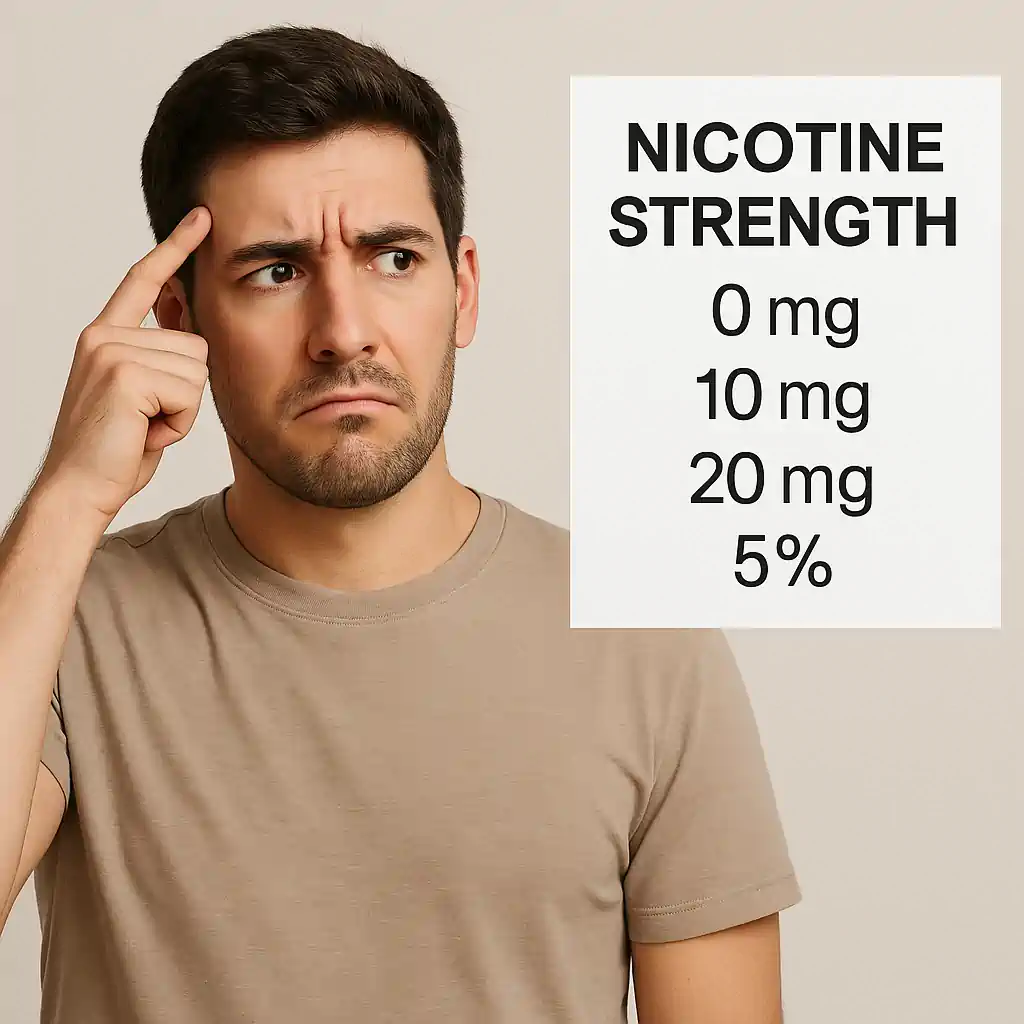
If you’re an adult who already uses nicotine, you’ve probably seen labels like 0 mg, 10 mg, 20 mg, or 5% on vape products and thought, “Okay… but what does that actually mean for me?”
Nicotine strength can be confusing, especially if you’re used to thinking in “cigarettes per day” instead of milligrams per milliliter. This guide keeps things simple: we’ll walk through what nicotine strengths are, how they’re labeled, why they matter for your body, and what to keep in mind if you’re thinking about reducing your nicotine use over time.
Important: Nicotine is an addictive substance. The safest choice is not to start using nicotine at all, and if you don’t currently use it, this article is not a recommendation to begin. If you already use nicotine and have questions about changing your intake, it’s best to speak with a healthcare professional.
-
What Is Nicotine Strength, Really?
When you see a number like 10 mg/mL or 20 mg/mL, that number is describing how much nicotine is in the e-liquid, not how strong a single puff feels.
Two common ways of showing strength:
-
-
-
- mg/mL (milligrams per milliliter)
- Example: 10 mg/mL means there are 10 milligrams of nicotine in each milliliter of e-liquid.
- Percentage (%)
- Example: 2% nicotine roughly equals 20 mg/mL.
- A rough rule many brands follow:
- 1% ≈ 10 mg/mL
- 2% ≈ 20 mg/mL
- mg/mL (milligrams per milliliter)
-
-
These numbers help adult users compare products and understand roughly how concentrated the nicotine is in what they’re using.
-
Why Nicotine Strength Matters
Nicotine strength isn’t just a technical detail on the label. It affects:
-
-
-
- How quickly your body absorbs nicotine
- How strong the “hit” feels
- How likely you are to develop or maintain dependence
- How easy or difficult it might be to cut back later
-
-
Higher strengths can deliver more nicotine in fewer puffs. That can make it easier to overuse without really noticing, especially if you’re puffing out of habit while scrolling or working.
Lower strengths may deliver less nicotine per puff, but that doesn’t automatically mean “safer” if someone compensates by using it constantly. Frequency and patterns of use still matter.
-
Nicotine, Your Body, and Dependence
Nicotine affects your brain and nervous system. Many adult users describe:
-
-
-
- Short-term effects like a mild buzz, focus, or relaxation
- Long-term risk of dependence, where the body and brain expect regular nicotine
- Withdrawal symptoms if they stop suddenly, like irritability, cravings, or restlessness
-
-
Over time, the brain can adapt to regular nicotine intake. That’s part of why any strength, if used regularly, can maintain dependence. The number on the bottle doesn’t change the fact that nicotine itself is addictive.
If you’re noticing:
-
-
-
- You feel anxious without your vape
- You’re using it more often than you planned
- You struggle to get through a work meeting or movie without it
-
-
…those are all signals that it might be time to talk to a doctor or quit-smoking service about cutting down or stopping, rather than optimizing strength.
-
-
How Nicotine Strengths Are Typically Grouped
-
Different brands organize their ranges in different ways, but you’ll often see something like:
-
-
-
- Nicotine-free (0 mg/mL)
E-liquid or disposables with no nicotine at all. - Lower strengths (e.g., ~3–6 mg/mL or 0.3–0.6%)
Often marketed to adult vapers who already use low-nicotine products. - Medium strengths (around 10–12 mg/mL or 1.0–1.2%)
A mid-range that still delivers noticeable nicotine. - Higher strengths (often 18–20 mg/mL or around 2%)
Very concentrated; sometimes used where regulations cap maximum strength.
- Nicotine-free (0 mg/mL)
-
-
These categories are descriptions, not recommendations. They exist so adult users can understand what they’re buying and how products compare. If you’re unsure what’s appropriate for your situation, a healthcare professional is the safest person to advise you.
-
-
Thinking About Cutting Down Nicotine
-
Many adult vapers don’t just want to “find their level”; they’re thinking ahead:
“How do I need less of this over time?”
Some practical, health-focused ideas to keep in mind:
-
-
-
- Your end goal matters.
Are you hoping to quit nicotine entirely one day? If yes, it may help to view nicotine strengths as a temporary tool on the way to zero, not something to optimize forever. - Changes should be gradual and supervised.
If you’re considering reducing nicotine for health reasons, it’s wise to talk with a doctor, pharmacist, or smoking-cessation service. They can help you design a plan that fits your health history, medications, and lifestyle. - Watch your actual usage, not just the label.
Swapping to a lower strength but doubling your puffs doesn’t reduce your nicotine exposure. Pay attention to:- How often you reach for your device
- Whether you’re using out of habit vs. genuine cravings
- Any withdrawal signs when you pause
- Your end goal matters.
-
-
Again, the healthiest destination is to use no nicotine at all. If that feels impossible right now, it might be a sign that extra support from a professional service could help.
-
Legal Age and Local Regulations Always Come First
Vaping rules are tightening across many regions, especially in Europe:
-
-
-
- There are strict age limits for buying or using nicotine products.
- Some countries cap the maximum nicotine strength for e-liquids and disposables.
- Advertising rules often limit how products can be described or promoted.
-
-
Wherever you are, always:
-
-
-
- Check your local laws and regulations
- Make sure you’re over the legal age in your country or region
- Avoid supplying or sharing nicotine products with anyone underage
-
-
Nicotine products are for legal-age adults only, full stop.
-
When in Doubt, Talk to a Professional
Online guides (including this one) can help you understand the basics — what the numbers mean, how strengths are labeled, and why nicotine deserves respect as an addictive substance.
But if you’re asking questions like:
-
-
-
- “Is my current nicotine use risky for my health?”
- “Should I be cutting down, and how?”
- “What’s the safest way for me to move toward zero nicotine?”
-
-
…those are best answered by a healthcare professional who can look at your full situation — medical history, medications, mental health, and smoking/vaping background — and give tailored support.
If you’re thinking about quitting:
-
-
-
- Look for local quit-smoking services
- Ask your doctor about NRT (nicotine replacement therapy) or other medically supervised options
- Use reliable health websites from government or hospital systems as references
-
-
Key Takeaways
-
-
- Nicotine strength tells you how concentrated nicotine is in your vape, usually in mg/mL or %.
- Higher numbers mean more nicotine per milliliter, but your actual intake also depends on how often and how deeply you inhale.
- Nicotine is addictive at any strength. Using it regularly can create dependence and make stopping harder later.
- The healthiest choice is not to use nicotine at all. If you already do, consider talking to a professional about ways to reduce and eventually quit.
- Always follow local regulations and ensure nicotine products are used by legal-age adults only.
-